Planck Vision Systems manufactures thermal imaging solutions for portable inspection and 24/7 monitoring of commercial applications including: Early Fire Detection, Manufacturing, Substations and Tunnels, Electrical Panel/Cabinets, Storage Facilities, Data Centers and Elevated Body Temperature Screening. Our company is headquartered in Santa Barbara CA, the capital of infrared sensing technologies in the United States.
A cargo fire broke out on December 9, 2024, at 4:30 p.m. local time aboard the freighter Langeland at Gran Canaria’s Arinaga port, while the ship was loading scrap metal. Despite the crew’s efforts, the fire spread due to electrical damage. The fire was brought under control by December 10 after intense firefighting, involving water and foam. Initial investigations suggest the cause was spontaneous ignition of the scrap metal.
NEWS
On December 9, 2024, around 4:30 p.m., a cargo fire broke out aboard the freighter Langeland at Gran Canaria’s Arinaga port while the ship was loading scrap metal. The fire quickly erupted in the cargo hold, and the crew immediately attempted to close the hatches and activate the ship’s firefighting systems. Unfortunately, the electrical system controlling the hatches was damaged in the blaze, preventing the crew from fully sealing the hold and allowing the fire to spread further.
As the fire intensified, most of the crew evacuated the vessel. Emergency responders arrived and assisted the remaining crew in battling the flames. The port temporarily suspended operations, and nearby vessels were moved for safety. Gran Canaria’s firefighters deployed a ladder truck to spray water onto the burning ship from the dock, though they paused efforts late Monday night to avoid compromising the vessel’s stability due to excessive water.
By Tuesday morning, the fire had died down but reignited, producing thick black smoke that drifted away from the port. Fire crews resumed efforts using a combination of water and foam, with the assistance of a tugboat equipped with fire monitors. By 6 p.m. local time on December 10, the fire was under control, but officials continued to monitor the situation to ensure that it would not reignite. The estimated damage from the fire is approximately $5 million.
Initial investigations suggest that the fire may have been caused by spontaneous combustion of the scrap metal, which is not uncommon in such materials. Bulk scrap metal can sometimes contain hazardous contaminants such as damaged lithium-ion batteries, which are capable of igniting during handling or storage. This incident is the second recent fire at the Arinaga industrial complex involving scrap metal, raising concerns about safety protocols for handling such materials.
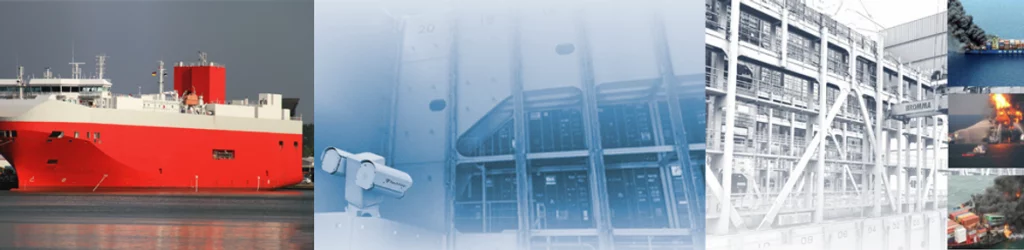
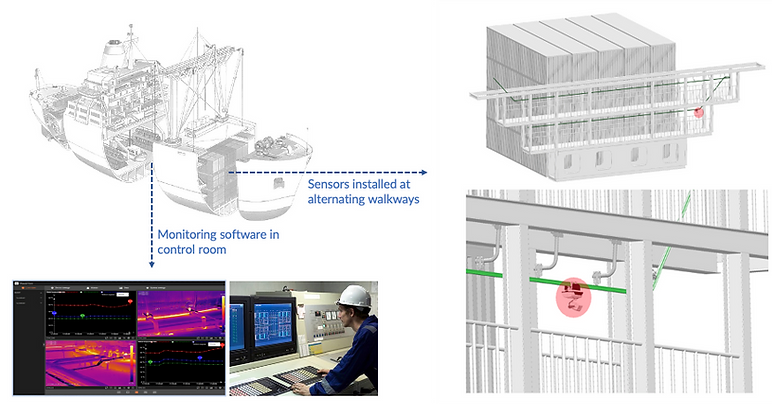
For cargo ships, early detection of fire hazards is crucial to preventing such disasters. Planck Vision Systems provides advanced protection solutions using the TRX600, TNC20 fixed mount, and the TNC400PT thermal imaging cameras, designed for continuous monitoring and precise data analysis.
Our systems are your vigilant sentinels in the harsh environment of maritime transport, capable of detecting critical trends and anomalies that could indicate the presence of fire hazards. With such equipment, early detection of a fire can prevent its escalation, significantly reducing the potential losses, such as the $5 million estimated in this case.
For cargo ships, Planck Vision Systems offers unparalleled protection solutions utilizing the advanced TRX600, TNC20 fixed mount, and the TNC400PT thermal imaging cameras. Designed for relentless monitoring and meticulous data analysis, our equipment is your sentinel in the demanding conditions of maritime transport. Our systems’ perpetual oversight detects crucial trends and irregularities, providing a fortified layer of defense against threats to cargo safety and integrity. Whether navigating tranquil or turbulent seas, rely on Planck Vision Systems for steadfast cargo protection, mitigating losses and shielding assets from the unforeseen.



 English
  繁體中文
繁體中文  Deutsch
  Español
  Français
  日本語
日本語  한국어
한국어