
Planck Vision Systems manufactures thermal imaging solutions for portable inspection and 24/7 monitoring of commercial applications including: Early Fire Detection, Manufacturing, Substations and Tunnels, Electrical Panel/Cabinets, Storage Facilities, Data Centers and Elevated Body Temperature Screening. Our company is headquartered in Santa Barbara CA, the capital of infrared sensing technologies in the United States.
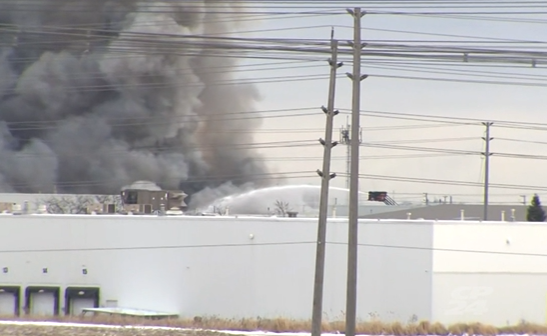
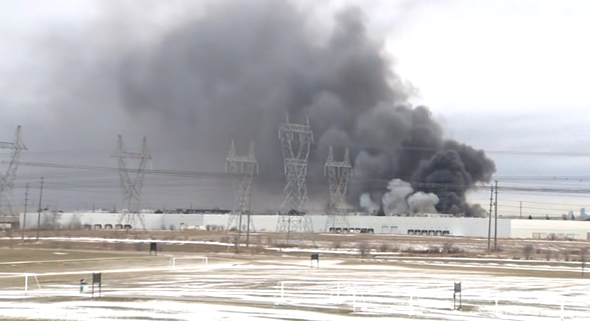
A two-alarm fire broke out near Toronto Pearson International Airport on January 6, 2025, at a single-story commercial property located at 1787 Drew Road, Mississauga. The fire caused heavy smoke to billow from the building, and the structure eventually collapsed. Fire crews are on the scene, working to prevent further damage to neighboring buildings. There were no reported injuries, and the fire’s cause is still under investigation. Traffic disruptions are significant, with both east and westbound lanes on Drew Road closed.
NEWS
On January 6, 2025, a two-alarm fire broke out at 1787 Drew Road in Mississauga, near Toronto Pearson International Airport. The fire, which originated in a single-story commercial property, sent thick smoke billowing into the sky. Firefighters responded quickly to the scene, but as the fire progressed, the building’s structure began to collapse. Fire crews were forced to retreat initially to ensure their safety, and efforts shifted towards protecting neighboring properties from the blaze.
The fire is expected to cause significant property damage. While the exact cause remains under investigation, officials estimate the financial loss from the fire could easily exceed $1 million. Thankfully, no injuries were reported, and the situation remains under control, although fire crews are expected to remain at the scene for several hours.
Police have advised drivers to avoid the area, as both east and westbound lanes on Drew Road are closed due to the ongoing emergency operations. Traffic is being diverted through alternate routes.
The fire highlights the importance of early detection and rapid response in managing such large-scale incidents. Planck Vision Systems’ thermal imaging cameras are designed to assist in such situations, providing 24/7 monitoring of facilities and offering real-time data to identify anomalies before they escalate.
By deploying fixed mount or pan/tilt thermal cameras in strategic locations, large areas, like commercial properties, can be surveyed efficiently, potentially preventing devastating fires like this one. Early detection with Planck Vision Systems cameras would allow for timely intervention, significantly reducing the risk of extensive property damage and loss.
source: cp24.com
Scalable Solutions for Early Fire Detection
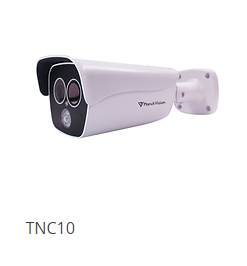
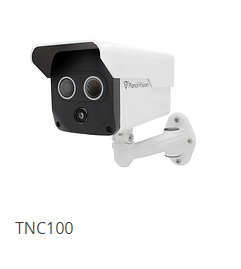
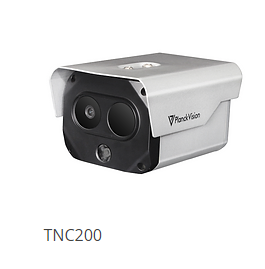
For early fire detection, Planck Vision TNC thermal imaging cameras are far superior to traditional systems that can alert to fire only after the visible consequences of smoke and flame are present. TNC cameras can help to prevent the destruction of goods and loss of life by surveilling for abnormal heat conditions before fires erupt.
Top 6 Advantages of Planck Vision Thermal Cameras:
Industry-Leading Sensitivity: Our cameras easily identify dangerous pre-flame conditions and post-flame hotspots, providing early warnings to prevent extensive damage.
Customizable Options: With a wide selection of sensor resolution and lens optics, we tailor our cameras to suit specific surveillance needs, ensuring optimal performance for every application.
Dual Thermal/Visible Cameras: Combining thermal and visible cameras in one unit enhances situational awareness, allowing for comprehensive monitoring and swift response to potential threats.
Easy Installation and Operation: Our IP cameras are designed for seamless integration into your local network, simplifying installation and operation for enhanced efficiency.
User-Programmed Analytics: With analytics running on Edge, our systems offer the best reliability, empowering users to customize monitoring parameters for precise threat detection.
On-Camera Head Relays: Control is placed where it’s needed most with on-camera head relays, facilitating quick adjustments and interventions in critical situations.




 English
  繁體中文
繁體中文  Deutsch
  Español
  Français
  日本語
日本語  한국어
한국어