Planck Vision Systems manufactures thermal imaging solutions for portable inspection and 24/7 monitoring of commercial applications including: Early Fire Detection, Manufacturing, Substations and Tunnels, Electrical Panel/Cabinets, Storage Facilities, Data Centers and Elevated Body Temperature Screening. Our company is headquartered in Santa Barbara CA, the capital of infrared sensing technologies in the United States.
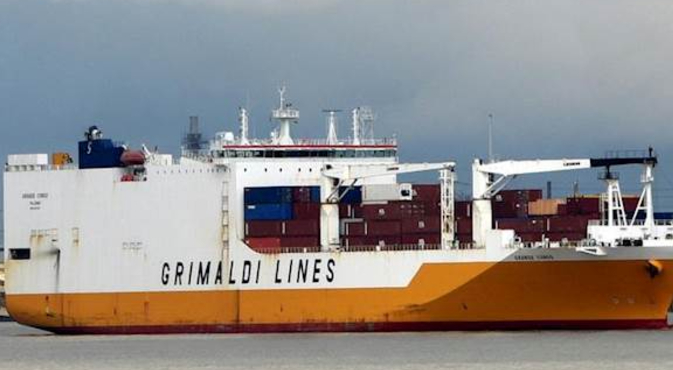
On February 21, 2025, a fire broke out aboard the Grande Congo, a 47,600 gross ton ro-ro cargo ship, on its ro-ro deck. The incident occurred while the ship was traveling across the Atlantic Ocean. The fire was reportedly extinguished and the vessel arrived in Newport News, Virginia, from Valencia on February 24, 2025. This marks the second casualty for a Grimaldi ship in recent days. The exact cause of the fire and the estimated loss remain unclear.
NEWS
On Friday, February 21, 2025, a fire broke out aboard the Grande Congo, a 47,600 gross ton ro-ro cargo ship, while it was in the Atlantic Ocean. The fire started on the ro-ro deck, and despite the severity of the incident, it was reported that the fire was extinguished before it could cause catastrophic damage. The vessel, which had arrived from Valencia, Spain, made it to Newport News, Virginia, on February 24, 2025.
This incident represents the second casualty to impact a Grimaldi Group vessel in a very short period. The exact cause of the fire remains unclear, and the estimated financial loss from the fire has yet to be determined. However, the fire is considered a significant disruption to maritime operations and highlights the risks faced by ro-ro vessels. The incident comes amid increasing concerns about fire safety on board cargo ships.
The Grande Congo was built in 2010 and is a crucial part of Grimaldi’s ro-ro fleet. Fires on such vessels can have severe consequences not just for the ship but for the cargo it carries. Timely detection and response to fires can help minimize damage, especially in the confined spaces of a ro-ro deck.
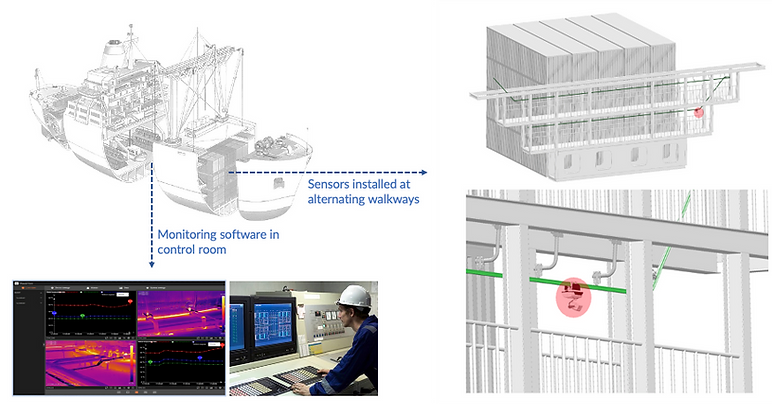
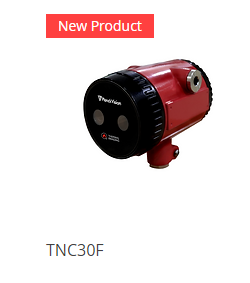
Planck Vision Systems offers advanced thermal imaging solutions for maritime operations, such as the TRX600, TNC20 fixed mount, and TNC400PT cameras, which provide continuous monitoring of temperature variations. These tools are essential for early fire detection and prevention. They ensure constant vigilance, detecting even slight temperature fluctuations that could indicate the potential for a fire before it escalates. This proactive approach can be the difference between a contained incident and a devastating loss, providing essential protection for cargo ships navigating challenging maritime environments.
For cargo ships, Planck Vision Systems offers unparalleled protection solutions utilizing the advanced TRX600, TNC20 fixed mount, and the TNC400PT thermal imaging cameras. Designed for relentless monitoring and meticulous data analysis, our equipment is your sentinel in the demanding conditions of maritime transport. Our systems’ perpetual oversight detects crucial trends and irregularities, providing a fortified layer of defense against threats to cargo safety and integrity. Whether navigating tranquil or turbulent seas, rely on Planck Vision Systems for steadfast cargo protection, mitigating losses and shielding assets from the unforeseen.



 English
  繁體中文
繁體中文  Deutsch
  Español
  Français
  日本語
日本語  한국어
한국어