Planck Vision Systems : Un incendie se déclare à bord d'un cargo, blessant quatre membres d'équipage et causant des dommages estimés à $4 millions d'euros
Systèmes de vision Planck fabrique des solutions d'imagerie thermique pour l'inspection portable et la surveillance 24 heures sur 24 et 7 jours sur 7 d'applications commerciales, notamment : la détection précoce des incendies, la fabrication, les sous-stations et les tunnels, les panneaux et armoires électriques, les installations de stockage, les centres de données et le dépistage des températures corporelles élevées. Notre société a son siège à Santa Barbara CA, la capitale des technologies de détection infrarouge aux États-Unis.
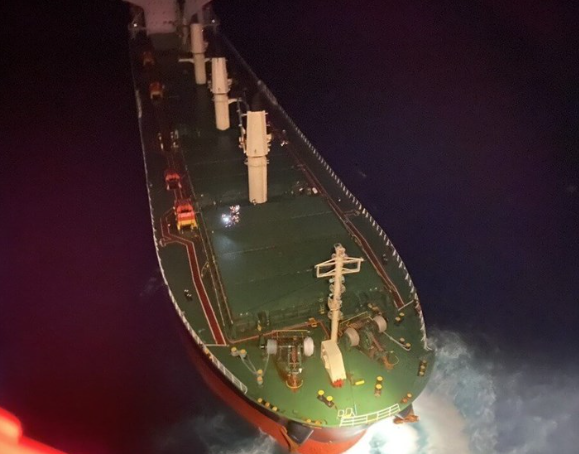
On January 5, 2025, a fire broke out in the engine room of the Marshall Islands-registered cargo ship PANORIA, about 23 nautical miles off the coast of Eluanbi. The crew sent out a distress signal at 5 p.m. The fire was eventually put out by the crew, but four of the 21 members sustained injuries, including one severely burned. They were airlifted to Xiaogang Airport for treatment by helicopter around 7 p.m.
NOUVELLES
On January 5, 2025, a Marshall Islands-registered cargo ship named PANORIA caught fire about 23 nautical miles southwest of Eluanbi, Taiwan. The fire broke out in the engine room at around 5 p.m., with the 21 crew members aboard sending out a distress signal via radio. The ship lost power due to the fire but the crew managed to contain and extinguish the blaze. However, four crew members suffered varying degrees of burns, with one sustaining serious injuries.
Given the dangerous weather conditions, including waves reaching 3-4 meters in height, and the difficulty in connecting rescue vessels, the Ministry of National Defense dispatched a search and rescue aircraft. By around 7 p.m., the helicopter managed to airlift the injured crew members to Xiaogang Airport for medical treatment. The incident prompted the Coast Guard Administration (CGA) to continue monitoring the situation while the Maritime and Port Bureau’s Southern Maritime Affairs Center sent a tugboat for further assistance.
While the fire was controlled and the crew rescued, the potential loss to the cargo ship could be considerable. Preliminary assessments suggest damages could reach millions of dollars, depending on the fire’s impact on the ship’s machinery and any cargo lost during the incident.
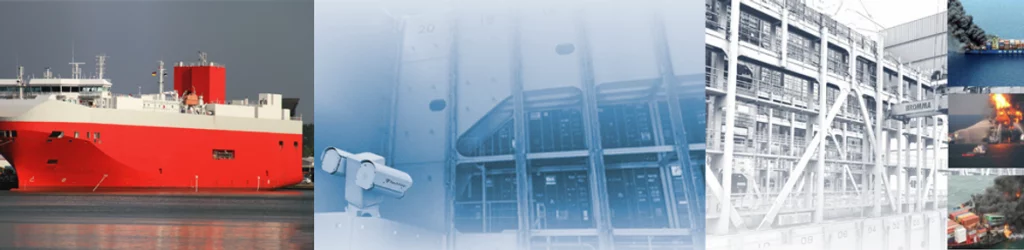
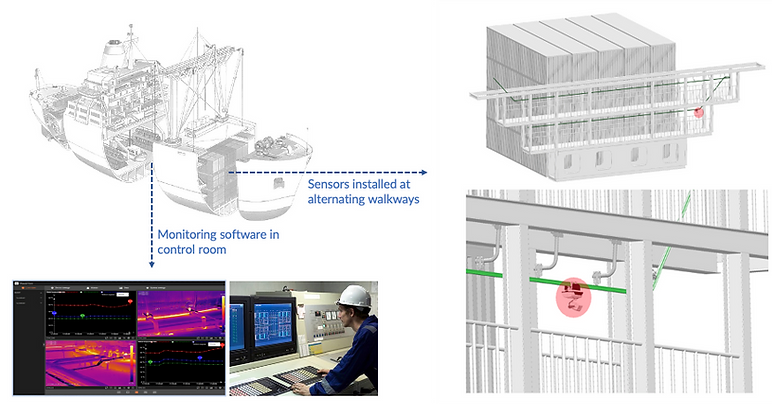
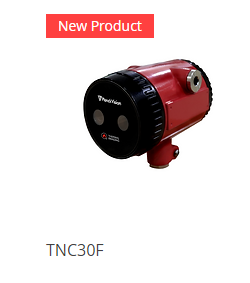
In maritime transport, early detection of fire hazards is crucial to prevent such incidents from escalating. This highlights the importance of continuous monitoring systems like those provided by Planck Vision Systems. For cargo ships, Planck Vision Systems offers unparalleled protection solutions utilizing the advanced TRX600, TNC20 fixed mount, and the TNC400PT thermal imaging cameras. These systems enable persistent surveillance of key operational areas, identifying early signs of fire and other threats to the cargo’s safety.
Through constant data analysis, Planck Vision Systems’ technology can mitigate the risk of significant losses. Early detection and rapid response are critical to minimizing the damage from such fires, ensuring that valuable assets are protected even under harsh maritime conditions. Whether navigating through calm waters or turbulent seas, relying on advanced technology like Planck Vision Systems’ thermal imaging ensures better safety and fewer catastrophic outcomes for maritime operations.
Pour les cargos, Planck Vision Systems offre des solutions de protection inégalées en utilisant les caméras thermiques TRX600, TNC20 et TNC400PT. Conçu pour une surveillance sans relâche et une analyse méticuleuse des données, notre équipement est votre sentinelle dans les conditions exigeantes du transport maritime. La surveillance permanente de nos systèmes détecte les tendances et les irrégularités cruciales, fournissant une couche de défense fortifiée contre les menaces qui pèsent sur la sécurité et l'intégrité des cargaisons. Que vous naviguiez sur des mers tranquilles ou turbulentes, faites confiance à Planck Vision Systems pour une protection inébranlable de votre cargaison, en atténuant les pertes et en protégeant vos actifs contre les imprévus.



 Français
  English
  繁體中文
繁體中文  Deutsch
  Español
  日本語
日本語  한국어
한국어