
Discover how thermal imaging technology helps prevent devastating substation fires like the PG&E Northern California incident. Learn how Planck Vision Systems’ solutions provide early fire detection for electrical infrastructure.
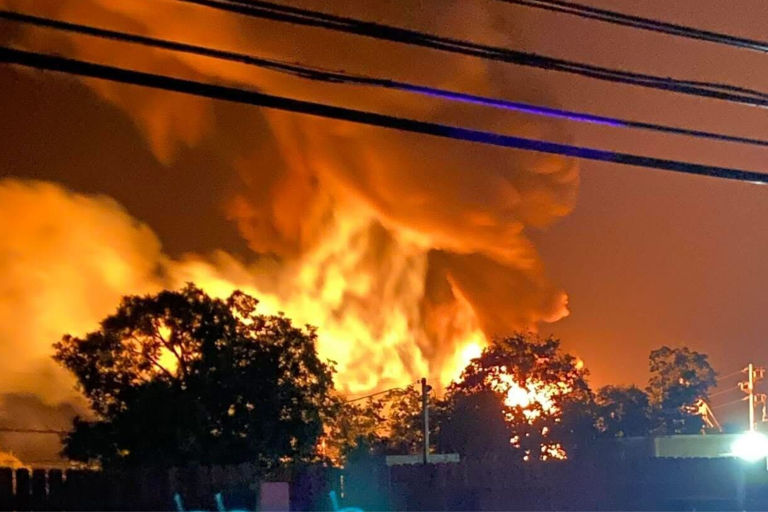
Massive fire erupts at PG&E substation in rural Northern California
Preventing Substation Fires with Thermal Imaging
Table of Contents
- Introduction
- Understanding Substation Fire Risks
- The Role of Thermal Imaging in Fire Prevention
- How Planck Vision Systems Provides Advanced Monitoring
- Real-World Case Study: PG&E Substation Fire
- Key Benefits of Early Detection
- Conclusion
Introduction
Substation fires can be catastrophic, leading to power outages, financial losses, and safety risks for workers and the surrounding community. A recent incident involving PG&E’s Northern California substation highlighted the urgent need for proactive fire prevention.
The most effective way to mitigate fire risks in electrical substations is thermal imaging technology, which enables early detection of overheating components before failures occur. This article explores how thermal monitoring prevents substation fires and why Planck Vision Systems offers industry-leading solutions for electrical infrastructure protection.
Understanding Substation Fire Risks
Why Are Substations Prone to Fire?
Electrical substations house high-voltage transformers, switchgear, and complex connections—components that generate heat during operation. Common causes of fire include:
✅ Equipment overheating due to excess load ✅ Loose or degraded connections causing sparks ✅ Failure of insulation materials leading to electrical arcs ✅ Flammable cooling oils within transformers
Once a fire starts, containment becomes difficult due to high-energy arcs and fuel sources within the equipment. The PG&E incident demonstrated how quickly a substation fire can escalate, disrupting power for thousands of customers.
The Role of Thermal Imaging in Fire Prevention
How Thermal Cameras Work
Thermal imaging cameras detect infrared heat signatures from electrical components. This allows operators to:
✔ Identify hotspots before visible signs of failure appear ✔ Monitor temperature fluctuations continuously ✔ Trigger automated alerts for immediate intervention
By deploying continuous thermal monitoring, substation operators can catch small temperature variations that signal potential hazards. Early detection prevents catastrophic failures like transformer explosions or uncontrolled fires.
How Planck Vision Systems Provides Advanced Monitoring
Planck Vision Systems: Next-Level Thermal Imaging
As a leader in infrared sensing technology, Planck Vision Systems offers state-of-the-art thermal cameras designed specifically for:
🚀 Substations & Electrical Infrastructure 🚀 Manufacturing & Industrial Automation 🚀 Data Centers & Storage Facilities 🚀 Fire Prevention in Commercial Applications
Key Features of Planck’s Thermal Monitoring Solutions
✔ 24/7 Continuous Surveillance: Real-time detection of overheating components ✔ Dual-Vision Imaging: Combines thermal sensors with high-resolution visual imaging ✔ Automated Smart Alerts: AI-driven analytics to trigger alarms before danger escalates ✔ Predictive Maintenance Integration: Helps utilities prevent unplanned outages
Real-World Case Study: PG&E Substation Fire
What Went Wrong in the PG&E Incident?
In April 2025, a massive fire erupted at PG&E’s Northern California substation, leaving thousands of customers without power. Investigators suggested overheating or electrical failure led to the incident, reinforcing the need for advanced monitoring technology.
Had thermal imaging cameras been installed, operators could have identified abnormal heat build-up before a crisis developed. Planck Vision Systems’ thermal monitoring solutions ensure such failures are detected days or even weeks in advance, allowing maintenance teams to intervene.
Key Benefits of Early Fire Detection
🔹 Prevents equipment damage & costly repairs 🔹 Enhances worker & community safety 🔹 Reduces downtime & service disruptions 🔹 Optimizes predictive maintenance strategies
Substation fires like PG&E’s incident don’t have to happen. Thermal imaging technology empowers operators to identify risks early, safeguarding infrastructure before disaster strikes.
Conclusion
In today’s high-demand electrical grid, fire prevention is critical for reliability and safety. By integrating advanced thermal imaging solutions, utilities can proactively detect overheating, mitigate failures, and prevent catastrophic fires like the PG&E substation incident.
Planck Vision Systems delivers cutting-edge thermal monitoring technology to protect electrical substations, manufacturing plants, and commercial facilities.
 English
  繁體中文
繁體中文  Deutsch
  Español
  Français
  日本語
日本語  한국어
한국어